
Timing Belt vs Timing Chain: What You Need to Know Before It Fails
Elite Motorworks · Gloucestershire
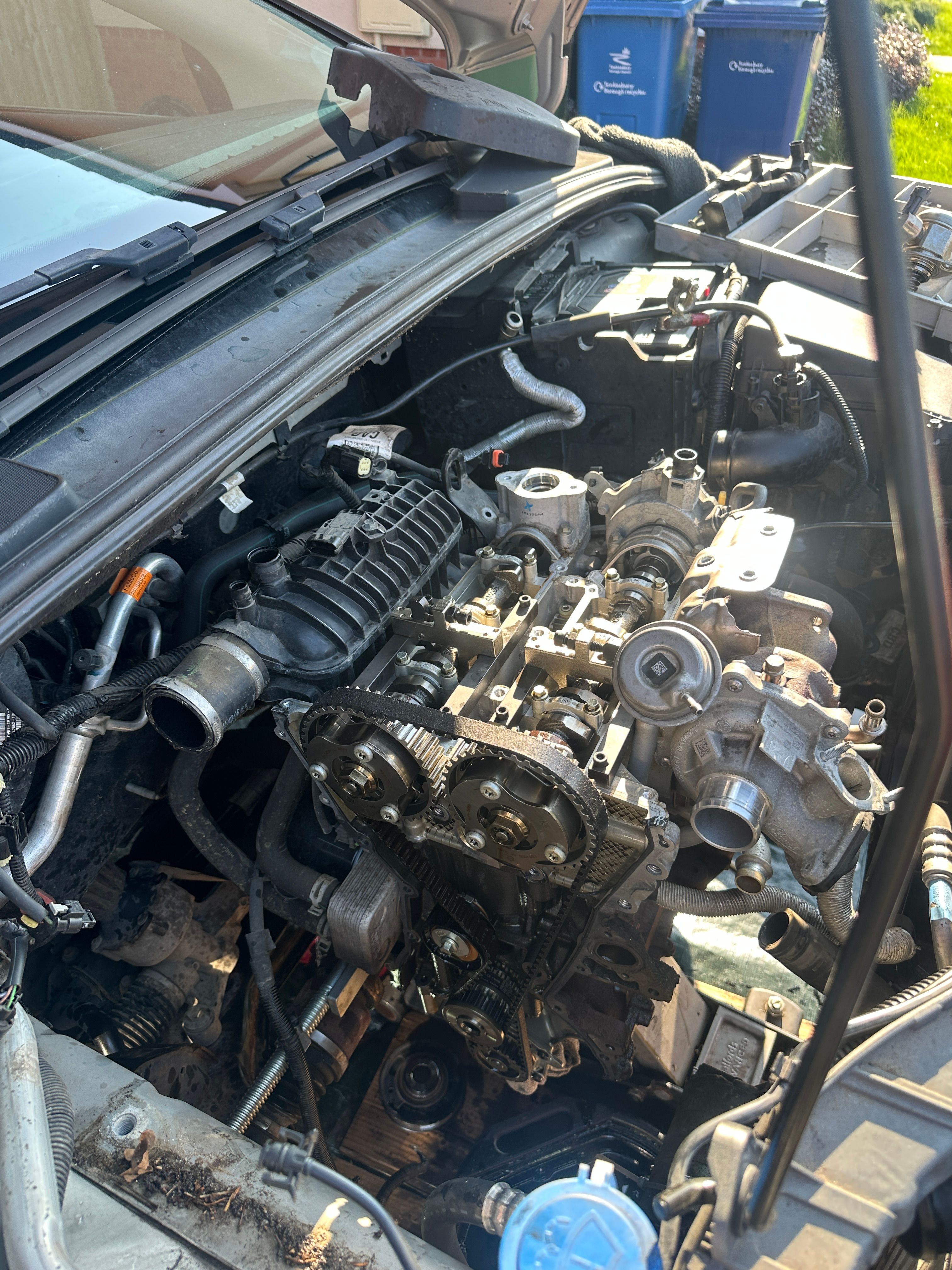
Your engine's timing system is one of the most critical components keeping everything running smoothly. Whether your car uses a timing belt or a timing chain, understanding the difference — and knowing when it's due for attention — can save you from a catastrophic engine failure and a bill that could easily run into the thousands.
What Does the Timing Belt or Chain Actually Do?
In simple terms, the timing belt or chain synchronises the rotation of the crankshaft and camshaft(s). This ensures that the engine's valves open and close at precisely the right moment during each cylinder's intake and exhaust strokes. If the timing is off — even by a fraction — valves can collide with pistons, causing severe and often irreparable engine damage.
Timing Belt vs Timing Chain: What's the Difference?
Timing Belt
A rubber belt with teeth on the inside surface. It's quieter and lighter than a chain, but it wears over time and must be replaced at the manufacturer's recommended interval — typically every 40,000 to 100,000 miles or every 4 to 6 years, whichever comes first. Some modern engines use a "wet belt" that runs inside the engine immersed in oil (like the Ford 1.0 EcoBoost), which has its own specific requirements.
Timing Chain
A metal chain, similar in principle to a bicycle chain but engineered to much tighter tolerances. Chains are generally more durable than belts and are designed to last the lifetime of the engine in many cases. However, "lifetime" doesn't always mean trouble-free. Chains stretch over time, tensioners and guides wear, and when they do, the symptoms can be subtle at first — a rattle on start-up, a check engine light, or rough running.
How Do I Know Which One My Car Has?
There's no universal rule — it depends entirely on the make, model, and engine variant. Some manufacturers use belts across their range, others use chains, and some use both depending on the engine. The safest approach is to check your owner's manual or ask a qualified mechanic. If you're not sure, get in touch and we'll tell you exactly what your vehicle has and when it's due.
Warning Signs You Shouldn't Ignore
Timing Belt Warning Signs
- High-pitched squealing or chirping from the front of the engine
- Visible cracking, fraying, or glazing on the belt (if accessible)
- Engine misfires or runs rough
- The belt is past its recommended replacement interval
- Oil leaking near the timing cover
Timing Chain Warning Signs
- Rattling or clattering noise on cold start-up that fades as the engine warms
- Check engine light (often related to camshaft or crankshaft correlation codes)
- Rough idle or hesitation under acceleration
- Metal shavings in the oil (found during an oil change)
- Engine timing codes stored in the ECU
What Happens If It Fails?
On most modern engines, a timing belt or chain failure is catastrophic. The vast majority of engines today are "interference" designs — meaning the valves and pistons occupy the same space at different times. If the timing is lost, they collide. The result is bent valves, damaged pistons, and potentially a destroyed cylinder head. In many cases, the repair cost exceeds the value of the vehicle.
This is why we always recommend replacing the timing belt before the interval is reached — not after. And if your timing chain is showing any of the symptoms above, don't wait for it to get worse.
How We Approach Belt and Chain Work
When we carry out a timing belt or chain replacement, we don't just swap the belt or chain and call it done. We replace the full kit — tensioners, idler pulleys, and where appropriate, the water pump (since it's driven by the timing belt on many engines and is already accessible during the job). We use genuine or OEM-quality parts, set the timing to manufacturer specification, and verify everything before the engine is started.
For wet belt systems like the Ford EcoBoost, we also clean the oil strainer and turbo feed gauze, replace the oil pump belt, and carry out a full oil and coolant change as part of the job. It's a thorough, methodical process — and it's the only way to do it properly.
The Takeaway
Whether your car has a timing belt or a timing chain, the message is the same: don't ignore it. Know what your vehicle has, know when it's due, and get it done before it becomes an emergency. A planned replacement is always cheaper, less stressful, and far less risky than dealing with the aftermath of a failure.
If you're not sure what your vehicle needs or when it's due, get in touch. We'll check for you and give you a straight answer.
Timing belt or chain due?
Don't leave it to chance. We carry out belt and chain replacements across Cheltenham and Gloucestershire — at your home or workplace.
Get an estimate