
What a Proper Diagnostic Investigation Looks Like
Elite Motorworks · Gloucestershire
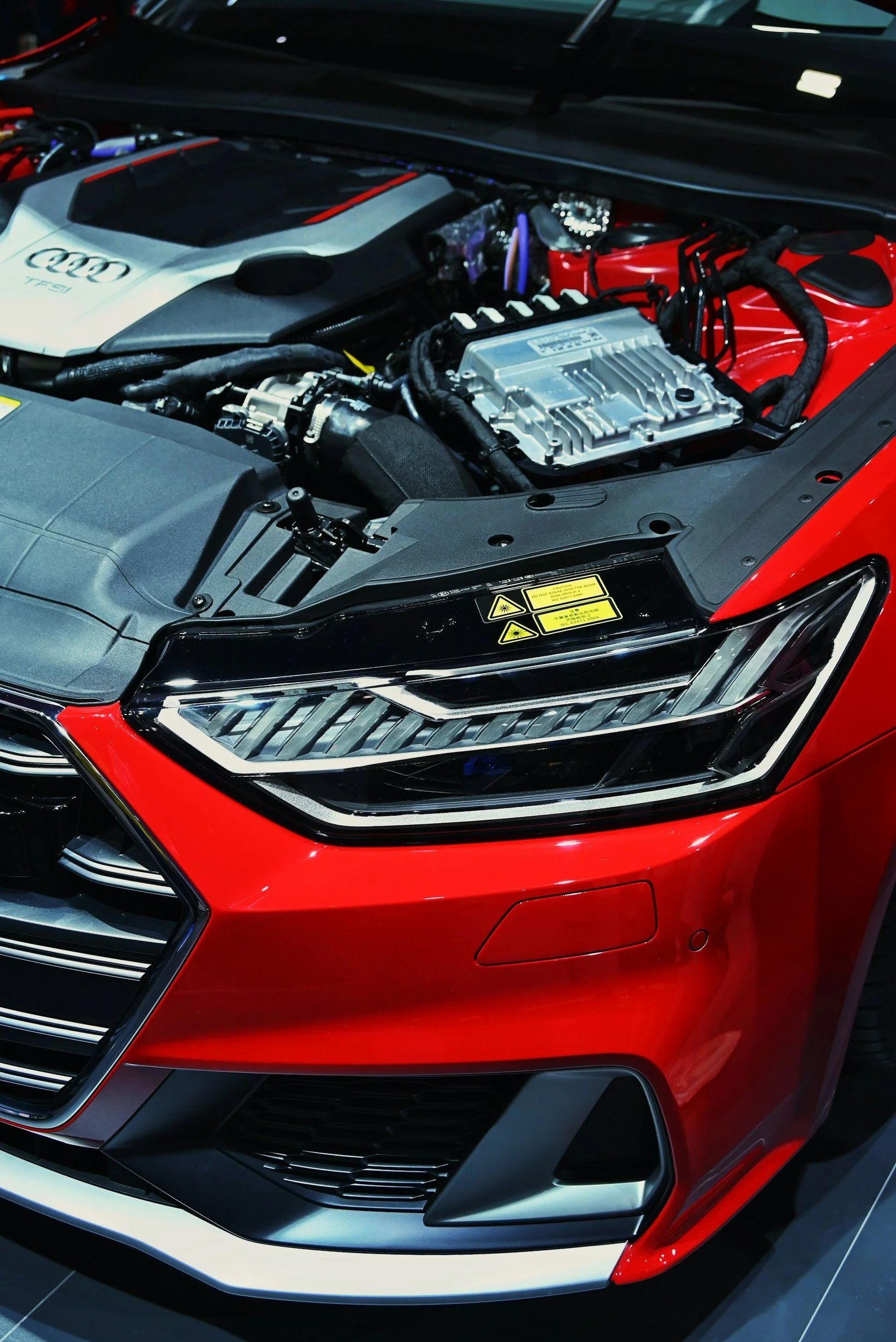
A warning light comes on. You take it to a garage. They plug in a code reader, tell you it's a faulty sensor, replace it, and charge you. Two weeks later, the light's back on. Sound familiar? That's not a diagnostic investigation — that's guesswork. Here's how we do it differently.
The Problem with "Just Reading the Codes"
A fault code is a starting point — nothing more. It tells you what the ECU has detected, but it rarely tells you why. A code for an oxygen sensor, for example, doesn't necessarily mean the sensor is faulty. It could be an exhaust leak, a wiring issue, a fuelling problem, or even a failing catalytic converter triggering the code downstream. Replacing the sensor without investigating the cause is like treating a symptom and ignoring the disease.
This is the single most common reason people end up paying twice for the same problem. The first garage replaces the part the code points to. When it doesn't fix it, the customer is left out of pocket and back to square one. We see it regularly — and it's entirely avoidable.
How We Approach a Diagnostic Investigation
When you book a diagnostic investigation with us, you're booking a proper, methodical fault-finding process — not a quick code read. Here's what that looks like in practice:
1. Listening to You First
Before we touch the vehicle, we talk to you. When did the problem start? What were you doing when it happened? Is it constant or intermittent? Does it happen when the engine is cold, warm, under load, or at idle? Your observations are often the most valuable diagnostic tool we have — they point us in the right direction before we even open the bonnet.
2. Full System Scan — Not Just Engine Codes
Using our Autel MaxiSys and Launch X431 Pro3S, we scan every module on the vehicle — not just the engine ECU. Modern vehicles have dozens of interconnected control units (ABS, transmission, body control, airbag, steering, and more). A fault in one system can trigger symptoms in another. A full system scan gives us the complete picture.
3. Live Data Analysis
Fault codes are historical — they tell you what happened, not what's happening right now. We monitor live data streams in real time: sensor readings, fuel trims, ignition timing, exhaust gas values, boost pressure, coolant and oil temperatures, and more. This is where the real answers are. A sensor might be "working" but reading outside its expected range — something a code reader alone would never reveal.
4. Physical Inspection and Testing
Not everything shows up on a screen. We carry out hands-on checks: visual inspection of wiring, connectors, hoses, and vacuum lines. We use our oscilloscope to test signal patterns, our thermal imaging camera to identify hotspots or cold spots that shouldn't be there, and our bore scope to look inside areas we can't otherwise see without dismantling. If it's an electrical fault, we test circuits with a multimeter and amp clamps to trace the issue to its source.
5. Road Test Under Real Conditions
Some faults only appear under specific conditions — under load, at certain speeds, at operating temperature, or after the vehicle has been sitting overnight. Where safe and appropriate, we road test the vehicle while monitoring live data to replicate the fault and confirm the diagnosis. This step is critical for intermittent issues that don't show up when the car is sitting on a driveway.
6. Clear Explanation and Honest Estimate
Once we've identified the root cause, we explain it to you in plain English — no jargon, no pressure. We tell you exactly what's wrong, what needs to be done to fix it, and what it will cost. If the repair isn't urgent, we'll tell you that too. You make the decision — we give you the information to make it confidently.
The Equipment That Makes the Difference
A proper diagnostic investigation requires more than a generic code reader. Here's what we bring to every job:
- Autel MaxiSys & Launch X431 Pro3S — Professional-grade diagnostic platforms with full system coverage, live data, bi-directional control, and coding capabilities.
- Remote Dealer-Level Diagnostics — Through our specialist remote diagnostics partner, we can access genuine dealer-level tools remotely via our Autel MaxiSys. This means ECU reprogramming, key coding, and module configuration — capabilities most mobile mechanics simply don't have.
- Oscilloscope — For testing electrical signal patterns, injector waveforms, ignition signals, and sensor outputs at a level of detail a multimeter can't match.
- Thermal Imaging Camera — Identifies temperature anomalies across the engine, exhaust system, and electrical components without contact.
- Bore Scope / Endoscope — Allows us to visually inspect inside the engine, intake manifold, exhaust ports, and other confined spaces without dismantling.
- Multimeter & Amp Clamps — For precise electrical testing: voltage, resistance, current draw, and parasitic drain testing.
- Stethoscope & Leak Detectors — For pinpointing mechanical noises and locating vacuum or pressure leaks.
Why This Matters to You
A proper diagnostic investigation costs you one hour. A misdiagnosis costs you a part you didn't need, the labour to fit it, and then the cost of doing the job again properly. We've lost count of the number of customers who've come to us after spending hundreds of pounds at other garages on parts that didn't fix the problem — because nobody took the time to actually investigate.
Our approach is simple: find the fault first, fix it once, fix it right. That's what the first hour is for. And that's why we don't rush it.
What It Costs
A diagnostic investigation is booked as a 1-hour minimum at £104.99 inc VAT. That hour covers travelling to you, setting up, carrying out the investigation, and giving you a clear explanation and estimate. There's no separate call-out fee — the hourly rate is all you pay.
Every visit also includes our vehicle protection kit as standard — seat covers, steering wheel cover, and floor mats — so your interior is kept clean throughout.
If the diagnosis takes longer than an hour (complex electrical faults or intermittent issues sometimes do), we'll discuss it with you before continuing. You're always in control of the cost.
The Takeaway
If your car has a warning light, a strange noise, a rough idle, or something that just doesn't feel right — don't settle for a quick code read and a guess. Book a proper diagnostic investigation. We'll come to your home or workplace, find the actual cause, and give you a straight, honest answer. That's the foundation of every good repair.
Warning light on? Something not right?
Book a proper diagnostic investigation. We come to you across Cheltenham and Gloucestershire — no guesswork, just answers.
Book a Diagnostic