
Engine Oil: Why It Matters More Than You Think
Elite Motorworks · Gloucestershire
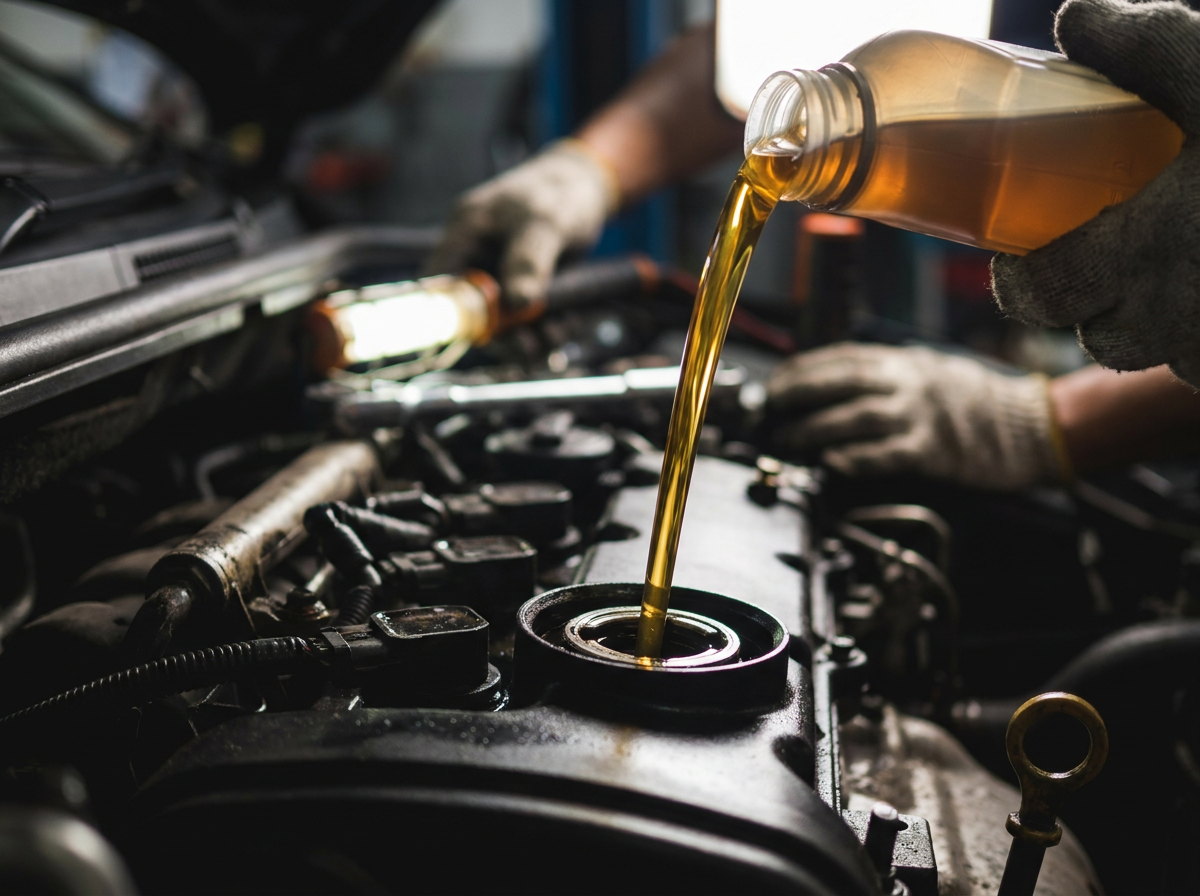
Engine oil is the single most important fluid in your car. It lubricates, cools, cleans, and protects the moving parts inside your engine — and when it's neglected, the consequences can be catastrophic. Here's what you need to know.
What Does Engine Oil Actually Do?
Most people know engine oil lubricates — but it does far more than that. Here are the five critical jobs your engine oil performs every time you turn the key:
Lubrication
Your engine contains hundreds of metal components moving at high speed — pistons, bearings, camshafts, valve train components. Oil creates a thin film between these surfaces, preventing metal-to-metal contact. Without it, friction generates extreme heat and rapid wear. An engine running low on oil can suffer irreversible damage in minutes.
Cooling
While the coolant system handles the bulk of engine temperature management, oil plays a vital supporting role. It absorbs heat from components the coolant can't reach — particularly the pistons, turbocharger bearings, and valve train. On turbocharged engines especially, oil cooling is critical. A turbo can spin at over 150,000 RPM and relies entirely on oil to keep its bearings from overheating.
Cleaning
Modern engine oils contain detergent and dispersant additives that pick up combustion by-products, soot, and microscopic metal particles, holding them in suspension so they can be trapped by the oil filter. This keeps the engine internals clean and prevents sludge build-up. Over time, these additives deplete — which is why regular oil changes are essential, not optional.
Sealing
Oil helps maintain a seal between the piston rings and cylinder walls. This seal is essential for maintaining compression — and compression is what makes your engine produce power efficiently. Degraded oil loses its ability to maintain this seal, leading to reduced compression, increased oil consumption, and loss of performance.
Corrosion Protection
Engine oil contains anti-corrosion additives that protect internal metal surfaces from moisture and acidic combustion by-products. Without this protection, bearings, journals, and other precision surfaces corrode — leading to premature failure and expensive repairs.
Why the Right Oil Specification Matters
Not all engine oils are the same. Every engine is designed to work with a specific oil specification — defined by viscosity grade (e.g. 5W-30, 0W-20) and performance standard (e.g. ACEA C3, VW 504.00, Ford WSS-M2C913-D). Using the wrong specification can cause real problems:
- Too thick: Poor cold-start lubrication, increased fuel consumption, and potential oil starvation to critical components.
- Too thin: Insufficient film strength under load, leading to accelerated bearing wear and potential engine damage.
- Wrong additive package: Some engines — particularly those with diesel particulate filters (DPFs) — require low-SAPS oil. Using standard oil can block the DPF, triggering warning lights and expensive repairs.
We always use the correct manufacturer-specified oil for your vehicle. It's not an area where cutting corners makes sense.
What Happens When Oil Is Neglected?
We see the consequences of neglected oil changes regularly. Here's what happens when oil isn't changed on time:
Sludge Build-Up
Old oil thickens and forms sludge — a tar-like deposit that blocks oil galleries, restricts flow, and starves components of lubrication. Once sludge builds up, it's extremely difficult and expensive to remove. Prevention is always better than cure.
Accelerated Engine Wear
As oil degrades, it loses its ability to protect. Metal-to-metal contact increases, bearing surfaces wear, and precision tolerances are lost. This is gradual and invisible until it becomes a noise, a warning light, or a catastrophic failure.
Turbo Failure
Turbocharged engines are particularly sensitive to oil quality. The turbo relies on a constant supply of clean oil to lubricate and cool its bearings. Degraded or contaminated oil is one of the leading causes of premature turbo failure — and a turbo replacement is not a cheap job.
Timing Chain Stretch
On engines with timing chains, the chain and its tensioner rely on oil pressure and lubrication to function correctly. Poor oil quality or low oil level can accelerate chain stretch, leading to timing faults, rough running, and ultimately engine damage if the chain jumps or snaps.
How Often Should You Change Your Oil?
Follow your manufacturer's recommended interval — typically every 10,000 to 15,000 miles or 12 months, whichever comes first. However, if you do mostly short journeys, stop-start driving, or tow regularly, the oil degrades faster and may need changing sooner. We'll advise you based on your driving patterns and vehicle.
Between services, check your oil level at least once a month. It takes two minutes and a paper towel. If the level is dropping noticeably between changes, that's something we need to investigate.
What We Do During an Oil Change
When we carry out an oil change, it's not just a drain-and-fill. Here's what's included:
- Correct specification oil — matched to your vehicle's manufacturer requirements.
- New oil filter — every time. The filter traps contaminants; reusing an old one defeats the purpose of fresh oil.
- New sump plug washer — a small detail, but it prevents leaks.
- Oil level and condition check — we inspect the old oil for signs of contamination, coolant ingress, or excessive metal particles.
- Reset service indicator — so your dashboard reflects the work that's been done.
The Takeaway
Engine oil is cheap. Engine repairs are not. A regular oil change with the correct specification oil is the single most effective thing you can do to protect your engine and extend its life. Don't skip it, don't delay it, and don't use the wrong oil. It's that simple.
Due an oil change or service?
We come to your home or workplace across Cheltenham and Gloucestershire. Correct oil, correct filter, done properly.
Book a Service