
Clutch Replacement: The Warning Signs and What's Actually Involved
Elite Motorworks · Gloucestershire
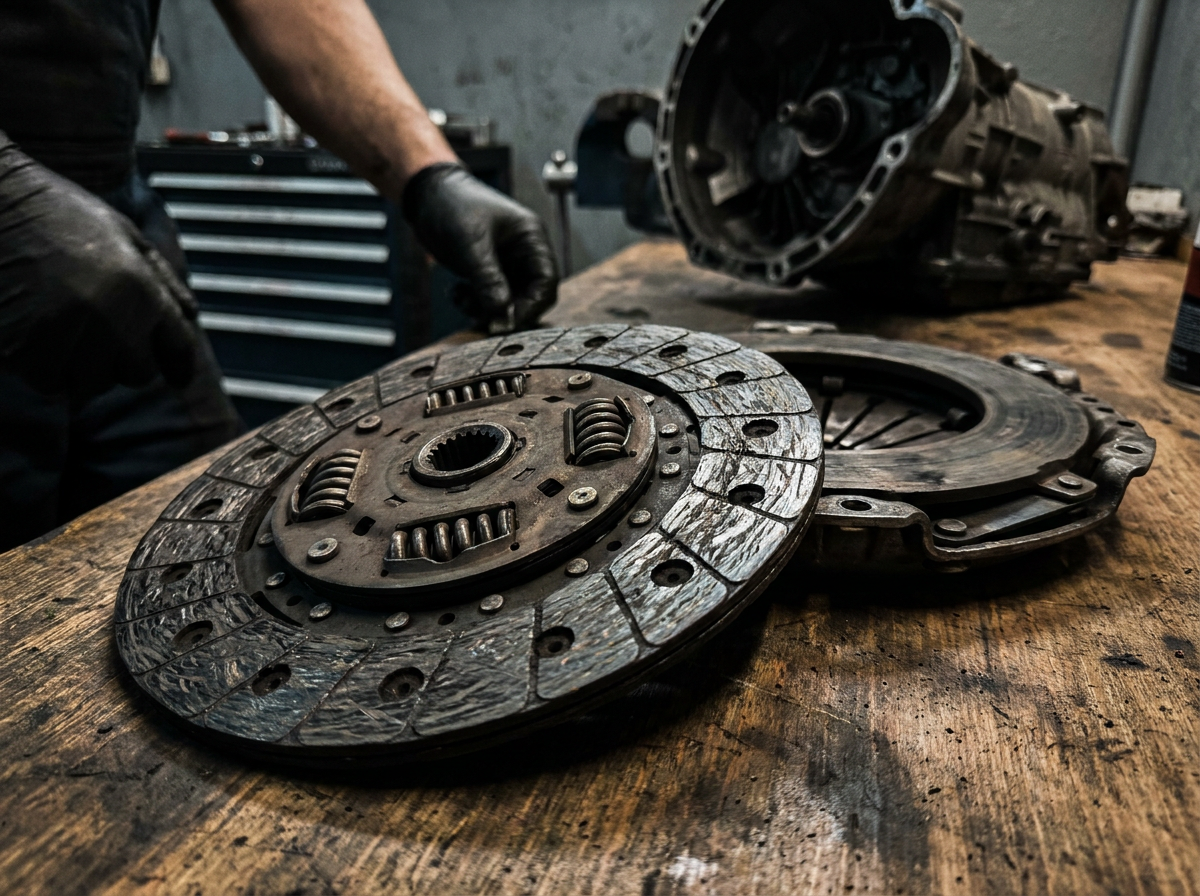
A failing clutch doesn't always announce itself with a dramatic bang. More often, it's a gradual change — a biting point that creeps higher, a slight slip under load, a smell you can't quite place. Here's what to look for, what causes it, and what a proper replacement involves.
Warning Signs Your Clutch Is Wearing Out
Clutch wear is gradual, which makes it easy to miss — especially if you drive the same car every day. Here are the symptoms we see most often:
Slipping Under Load
This is the most common sign. You press the accelerator, the engine revs rise, but the car doesn't accelerate as it should — particularly in higher gears or going uphill. The clutch friction material is worn to the point where it can no longer grip the flywheel effectively. Once slipping starts, it only gets worse.
High or Changed Biting Point
If the biting point has moved noticeably higher — closer to the top of the pedal travel — it's a strong indicator that the clutch disc is thinning. Some drivers adjust unconsciously over time, so it's worth paying attention to where the clutch engages compared to when the car was newer.
Burning Smell
A hot, acrid smell — similar to burning paper or friction material — after heavy use or in traffic. This is the clutch overheating due to excessive slip. If you notice this regularly, the clutch is being damaged every time it happens.
Difficulty Selecting Gears
If gears are crunching or difficult to engage — particularly first and reverse — it could indicate a clutch that isn't fully disengaging. This can be caused by a worn release bearing, a failing slave or master cylinder, or air in the hydraulic system. It needs proper diagnosis, not guesswork.
Judder on Take-Off
A shudder or vibration as you pull away from a standstill can indicate contamination on the clutch face (oil leak from a failing rear main seal or gearbox input shaft seal), a warped pressure plate, or worn engine mounts. Again — it needs investigating, not assuming.
Noises When Pressing or Releasing the Pedal
A whirring, squealing, or rattling noise that changes when you press or release the clutch pedal often points to a worn release bearing (also called a thrust bearing). On some vehicles, this is a relatively straightforward replacement — on others, it requires the gearbox to come out, at which point it makes sense to replace the full clutch assembly.
Why Proper Diagnosis Matters
Not every clutch symptom means you need a new clutch. A hydraulic leak, a failing slave cylinder, air in the system, or even a worn engine mount can mimic clutch failure symptoms. We've seen customers told they need a full clutch replacement when the actual fault was a £40 slave cylinder.
Before we recommend a clutch replacement, we carry out a proper assessment — checking the hydraulic system, inspecting for leaks, testing the pedal feel, and road testing the vehicle under load. If the clutch genuinely needs replacing, we'll tell you. If it doesn't, we'll tell you that too.
What a Clutch Replacement Involves
A clutch replacement is a significant job on most vehicles. Here's what's typically involved:
Gearbox Removal
On the vast majority of vehicles, the gearbox has to come out to access the clutch. This involves disconnecting driveshafts, gear linkages, wiring, and supporting the engine while the gearbox is lowered. It's labour-intensive and requires proper equipment and experience.
Full Clutch Kit Replacement
We always replace the full kit — clutch disc, pressure plate, and release bearing — as a set. Replacing just the disc and leaving a worn pressure plate or bearing in place is a false economy. With the gearbox already out, the additional parts cost is minimal compared to the labour of doing it again.
Flywheel Inspection or Replacement
With the clutch removed, we inspect the flywheel surface for scoring, heat damage, and cracks. If your vehicle has a dual-mass flywheel (DMF), we check it for excessive play and wear. A worn DMF can cause judder, noise, and premature clutch failure — and if it needs replacing, now is the time to do it.
Rear Main Seal & Input Shaft Seal Check
While the gearbox is out, we inspect the rear main seal (crankshaft seal) and gearbox input shaft seal for leaks. An oil leak onto a new clutch will destroy it in short order. If either seal is leaking or showing signs of age, we replace it during the job — preventing a repeat visit later.
Reassembly, Alignment & Road Test
The clutch is aligned using a proper alignment tool, the gearbox refitted, and everything torqued to specification. We then carry out an extended road test to confirm smooth engagement, correct pedal feel, and proper gear selection across all gears and driving conditions.
What Affects the Cost?
Clutch replacement costs vary significantly depending on the vehicle. The main factors are:
- Vehicle make and model — some gearboxes are straightforward to remove; others require significant disassembly.
- Dual-mass flywheel — if the DMF needs replacing, this adds to the parts cost (sometimes significantly).
- Additional seals or components — rear main seal, slave cylinder, or hydraulic line replacement if needed.
- Parts quality — we use OEM-quality clutch kits from reputable manufacturers. Budget clutch kits are a false economy.
We provide a clear, detailed estimate before any work begins. No surprises.
Mobile or Workshop?
A clutch replacement can be carried out at your home or workplace in many cases — we've done plenty on driveways and car parks across Cheltenham and Gloucestershire. For vehicles where the job requires more space, a lift, or extended access, we can arrange for the work to be carried out at our dedicated workshop in Ledbury. Either way, you get the same standard of work, the same parts quality, and the same 12-month / 12,000-mile warranty.
The Takeaway
If your clutch is showing any of the symptoms above, don't ignore them. A slipping clutch generates heat that damages the flywheel and pressure plate — turning a clutch replacement into a clutch and flywheel replacement. The sooner it's addressed, the less it costs. Get in touch and we'll give you an honest assessment and a clear estimate.
Clutch not feeling right?
Don't wait until it leaves you stranded. We diagnose and replace clutches across Cheltenham and Gloucestershire — at your door or at our Ledbury workshop.
Get an Estimate