
Brake Squeal & Brake Judder: What It Means and What to Do About It
Elite Motorworks · Gloucestershire
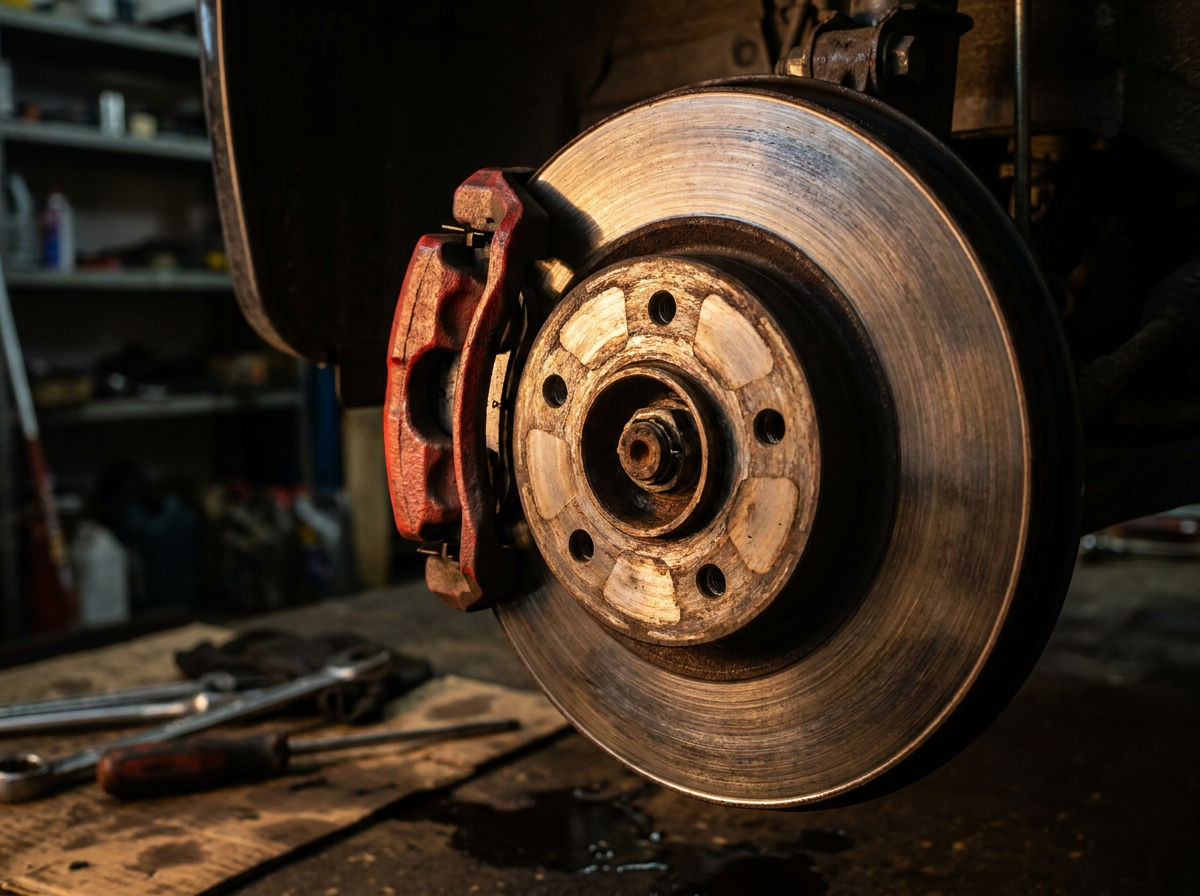
Your brakes are the single most important safety system on your car. So when they start squealing, grinding, or the pedal judders under your foot, it's not something to ignore. Here's what's actually going on — and what we do about it.
Brake Squeal — What Causes It?
Brake squeal is one of the most common complaints we hear. Sometimes it's harmless. Sometimes it's a warning sign. The key is knowing the difference.
Worn Brake Pads
Most brake pads have a built-in wear indicator — a small metal tab that contacts the disc when the pad material is nearly gone. That high-pitched squeal is by design. It's your car telling you the pads need replacing. Ignore it, and you'll be into metal-on-metal contact, which damages the discs and costs significantly more to fix.
Glazed Pads or Discs
If brakes overheat — from heavy use, riding the pedal, or cheap pad material — the surface can glaze over. Glazed pads lose friction and squeal because they're essentially sliding across the disc rather than gripping it. In mild cases, a proper bedding-in procedure can resolve it. In worse cases, the pads and sometimes the discs need replacing.
Dust, Moisture, or Surface Rust
A light squeal first thing in the morning or after the car's been sitting for a few days is usually surface rust on the discs. It's normal — a few brake applications and it clears. Brake dust build-up between the pad and disc can also cause intermittent noise. This is generally nothing to worry about.
Cheap or Incorrect Pads
Not all brake pads are equal. Budget pads with hard compound material are a common cause of persistent squeal. They might stop the car, but the material doesn't suit the disc surface. We always fit quality OEM-spec pads that are matched to your vehicle.
Brake Judder — What Causes It?
Brake judder is that pulsing or vibration you feel through the brake pedal — and sometimes the steering wheel — when you press the brakes. It's a different problem to squeal, and it usually points to the discs.
Disc Thickness Variation (DTV)
This is the most common cause. Over time, brake discs can wear unevenly — even by fractions of a millimetre. When the pad meets a thicker section, then a thinner section, you feel a pulse through the pedal. It's often caused by a sticking caliper slide pin, uneven pad deposits, or simply age and mileage. We measure disc thickness variation with a micrometer to confirm it.
Warped Discs
True disc warping is less common than people think, but it does happen — usually from excessive heat. Hard braking followed by standing on the brakes (like stopping at traffic lights after a fast motorway exit) can cause localised hot spots that distort the disc. The result is judder under braking, especially at higher speeds.
Sticking Calipers or Slide Pins
If a caliper isn't releasing properly, the pad stays in partial contact with the disc. This creates uneven wear, heat build-up, and eventually judder. You might also notice the car pulling to one side under braking, or a burning smell after driving. We check caliper movement and slide pin condition as part of every brake inspection.
Corroded or Pitted Discs
Cars that sit for long periods — especially outdoors — can develop deep corrosion on the disc surface. Light surface rust is normal, but heavy pitting creates an uneven braking surface that causes vibration. If the pitting is too deep, the discs need replacing.
How We Investigate Brake Problems
We don't guess with brakes. Here's what a proper brake inspection looks like:
- Visual inspection — pad thickness, disc condition, signs of uneven wear, fluid leaks, and corrosion.
- Disc measurement — we measure disc thickness and runout to check for DTV and warping.
- Caliper and slide pin check — ensuring the caliper moves freely and the piston retracts properly.
- Brake fluid condition — old or contaminated fluid affects pedal feel and braking performance.
- Road test — where safe and appropriate, we test under real braking conditions to replicate the fault.
When Should You Act?
Some brake noises are harmless. But as a general rule:
- Constant squeal that doesn't clear — get it checked. Likely worn pads or glazing.
- Grinding noise — stop driving and get it looked at immediately. Metal-on-metal contact damages discs and compromises safety.
- Pedal pulsing or vibration — book an inspection. It'll only get worse, and it affects stopping distance.
- Car pulling to one side under braking — likely a sticking caliper. Needs attention before it causes uneven tyre wear or further damage.
- Burning smell after driving — a sticking brake is overheating. Don't ignore it.
What It Costs
A brake inspection is carried out within our standard 1-hour minimum at £104.99 inc VAT. Every visit includes our vehicle protection kit — seat covers, steering wheel cover, and floor mats as standard. There's no separate call-out fee. If pads, discs, or other components need replacing, we'll give you a clear, upfront quote before any work begins.
We also offer flexible payment plans through Payment Assist — interest-free, spread over 3 to 6 months — so you're never forced to put off essential brake work because of cost.
Brakes not feeling right?
Don't wait until it gets worse. Book a brake inspection — we come to you across Cheltenham and Gloucestershire.
Book a Brake Inspection